
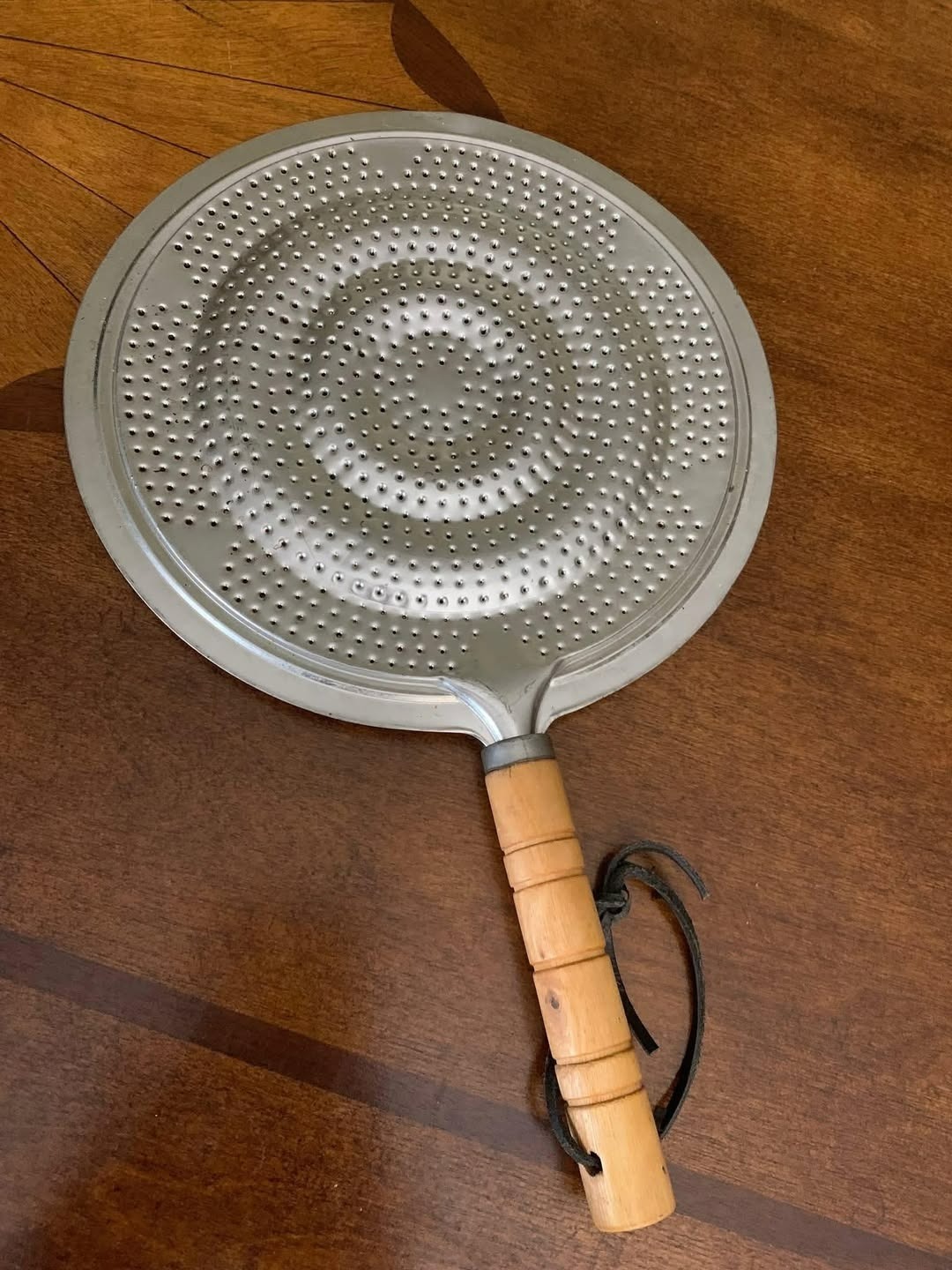
Place the diffuser directly on the burner grate.
Turn your burner to the desired flame level. For simmering, you’ll often use a medium flame, as the diffuser will lower the effective heat.
Place your pot or pan on top of the diffuser. You’ll notice the heat transfers more slowly and evenly. Adjust the flame as needed.
For the most delicate tasks (melting chocolate), you can even turn the flame off and let the residual heat in the diffuser do the work.
The One Caveat: It’s a Specialist, Not a Generalist
This tool is not for every job. Do not use it for:
Searing or High-Heat Frying: It will prevent you from getting a proper, crispy sear on steak or pancakes.
Rapid Boiling: It slows heat transfer, making it inefficient for bringing large pots of water to a boil.
Its purpose is control, not power. It’s for the dishes where patience is the primary ingredient.
The Verdict: Is It the Key to Perfection?
For any dish that lives in the world of “low and slow,” absolutely, yes. It is a mechanical guarantee of gentle, even heat that most modern stoves simply cannot replicate on their own. It turns the most temperamental gas burner into a tool as precise as a sous vide machine for stews, sauces, and simmers.
In a culinary culture obsessed with the next high-tech innovation, the simmer ring is a beautiful paradox: a timeless, analog solution to a very modern problem of control. It doesn’t have a button or a battery. It just works, with a quiet reliability that has seasoned countless meals long before we arrived in the kitchen.
It’s not about replacing your modern stove; it’s about completing it. That wooden-handled circle of metal isn’t hiding in your kitchen. It’s waiting. And for the cook who discovers it, it feels less like finding a new tool and more like being let in on an ancient, delicious secret.
