
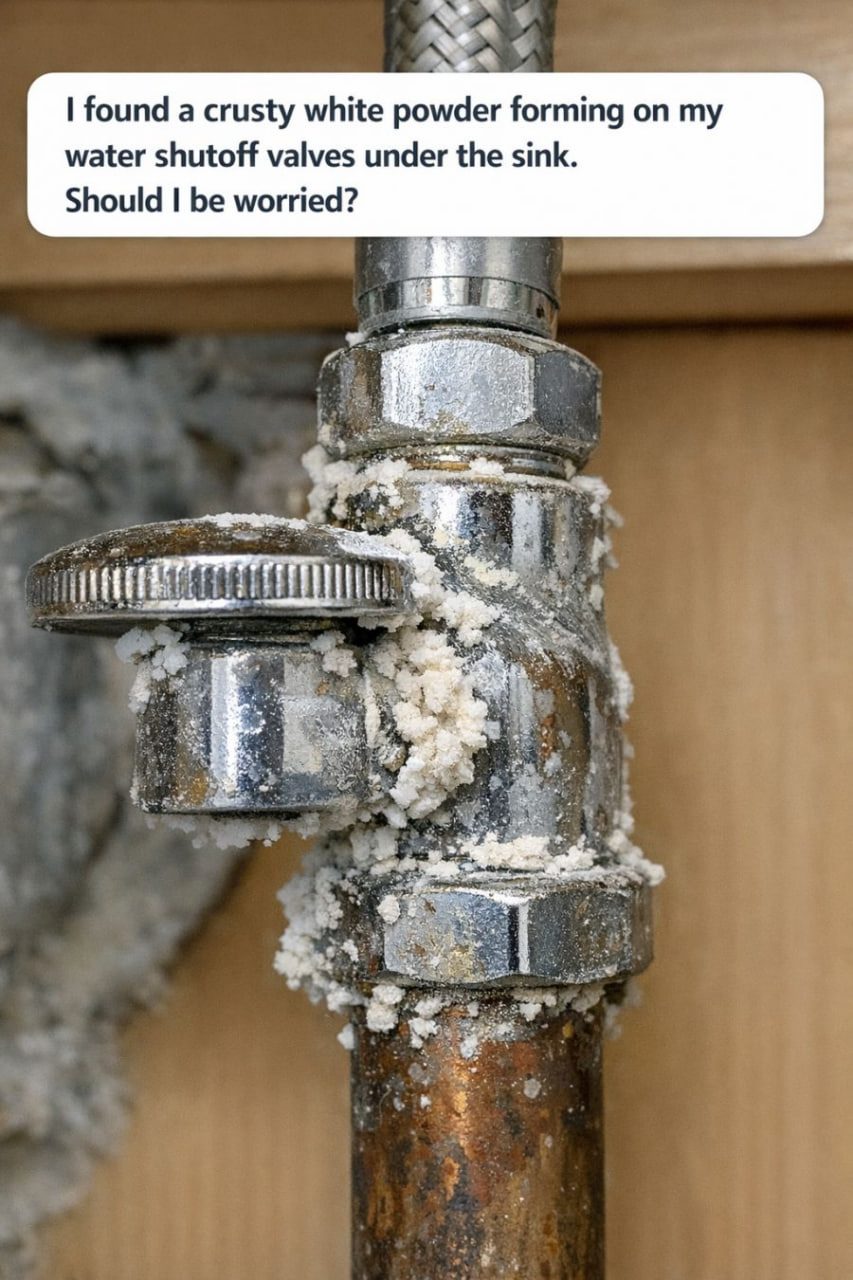
If you’ve ever peeked under your sink and noticed a chalky, crusty white buildup forming on your water shutoff valves, you’re not alone—and no, it’s not mysterious plumbing mold or something toxic. But it is a sign worth paying attention to.
Let’s break down what it is, why it happens, and when you should actually worry.
What Is That White, Crusty Stuff?
In most cases, that powdery buildup is mineral deposits—mainly calcium and lime—from hard water. When a tiny leak or slow seep occurs around a valve or fitting, water evaporates and leaves these minerals behind.
In some situations, especially with older plumbing, it can also be a sign of corrosion where moisture is reacting with metal parts (commonly brass or copper).
Think of it as your plumbing’s version of “dry lips”—not great, but also not an emergency yet.
Why It Forms on Shutoff Valves
Shutoff valves are prime real estate for buildup because:
They contain multiple threaded connections
Rubber washers inside them age and degrade
They’re rarely used, so small leaks go unnoticed
Under-sink areas often have poor airflow, slowing evaporation
Even a slow, pinhole-level leak can create a surprising amount of crust over time.
Should You Be Worried?
Short answer: mildly concerned, not panicked.
Here’s how to judge the situation:
Probably Not Urgent If:
The buildup is dry and powdery
There’s no active dripping
The cabinet floor is dry
The valve still turns (gently)
Worth Addressing Soon If:
The buildup keeps coming back after cleaning
You see green, blue, or brown discoloration
The valve feels stiff or frozen
There are damp spots or water stains nearby
Call a Plumber ASAP If:
There’s active leaking
The valve won’t turn at all
The metal looks pitted or flaky
You’re planning a renovation and need the valve to work reliably
How to Clean It (Safely)
Next Page
Next Page
