
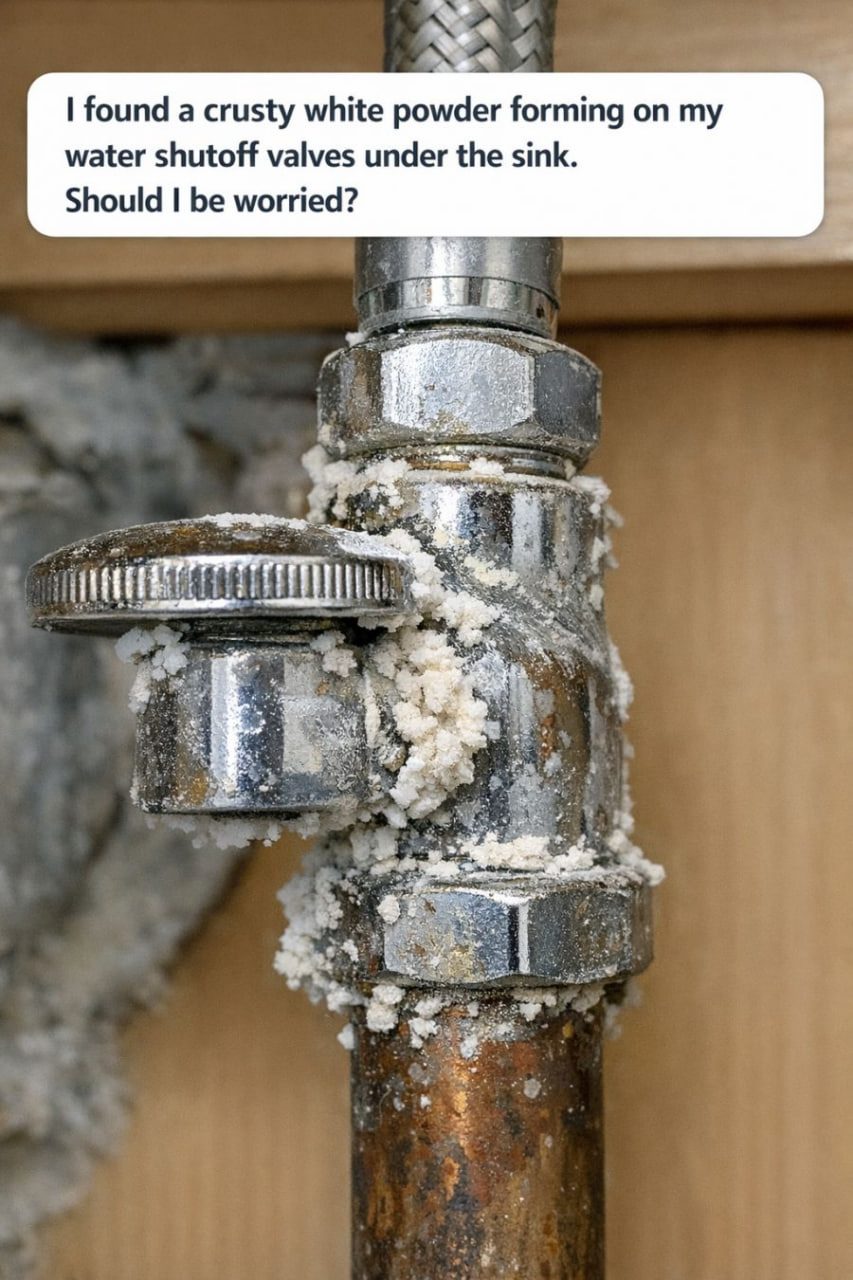
You can remove the buildup for inspection:
Wear gloves (old valves can be sharp or gritty)
Use a dry toothbrush or cloth to knock off loose deposits
For stubborn areas, lightly dab with white vinegar
Dry thoroughly and monitor over the next few days
If it reappears quickly, that’s your confirmation of an ongoing leak.
Can You Ignore It?
You can—but you probably shouldn’t.
Left alone, mineral buildup and corrosion can:
Seize the shutoff valve so it won’t close during an emergency
Weaken fittings until they fail suddenly
Lead to slow cabinet or floor damage you won’t notice right away
Replacing a shutoff valve is relatively inexpensive. Dealing with water damage is not.
The Bottom Line
That crusty white powder isn’t dangerous, but it is your plumbing quietly asking for attention. Think of it as a warning light—not flashing red, but definitely amber.
If you catch it early, a simple valve replacement or tightening can save you from a much bigger headache later.
And honestly? Checking under your sink once in a while is one of the easiest home-maintenance wins there is.
