
Smell
Fresh steak should have little to no odor. A sour, rotten, or ammonia-like smell is a strong sign of spoilage.
Texture
The surface should feel firm and slightly moist. If it feels slimy, sticky, or tacky, bacteria may be present.
Date and storage time
Check the expiration or “use by” date and consider how long the steak has been stored. Even if it looks acceptable, meat kept too long should be discarded.
Clear Signs the Steak Has Spoiled
Beyond turning gray, these indicators mean the steak should not be eaten:
Strong, unpleasant odor
Slimy or unusually sticky surface
Green, yellow, or iridescent patches
Excessive moisture pooling in the packaging
What Food Safety Experts Recommend
Food safety specialists agree that discoloration alone does not mean meat is unsafe. They advise combining visual inspection with smell, texture, and knowledge of proper storage. When uncertainty remains, caution is always the safer choice.
Steps to Take If Your Steak Has Turned Gray
Remove it from the packaging and smell it carefully.
Gently press the surface to check texture.
Review how long it has been stored and at what temperature.
If everything else seems normal, it can usually be cooked safely.
If any warning signs appear, discard it immediately.
Final Thought
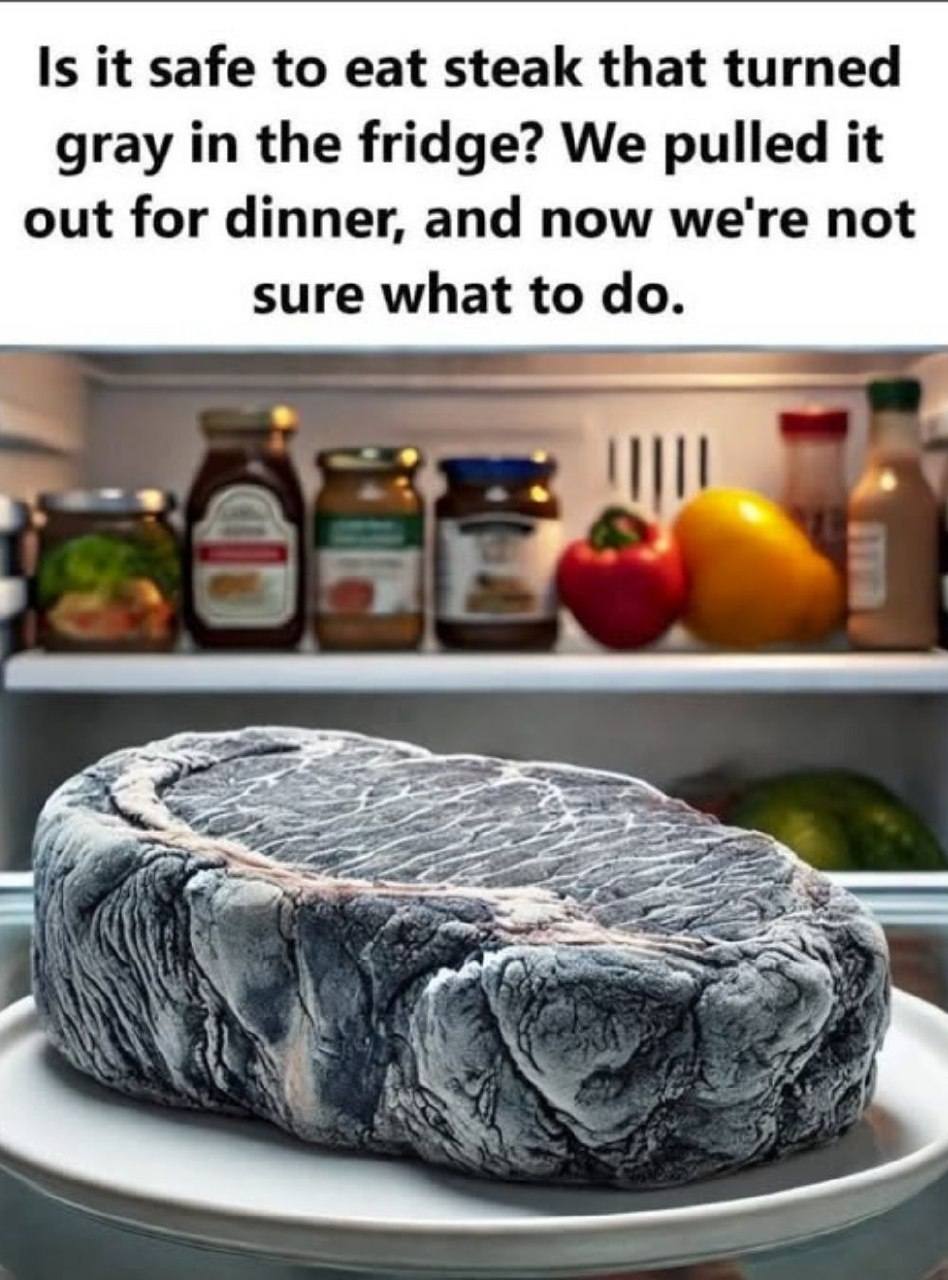
A gray steak isn’t automatically a bad steak. Color changes are often a natural result of storage and oxygen exposure. Trust your senses, check storage conditions, and when in doubt, prioritize safety. A cautious decision is always better than risking foodborne illness.
