
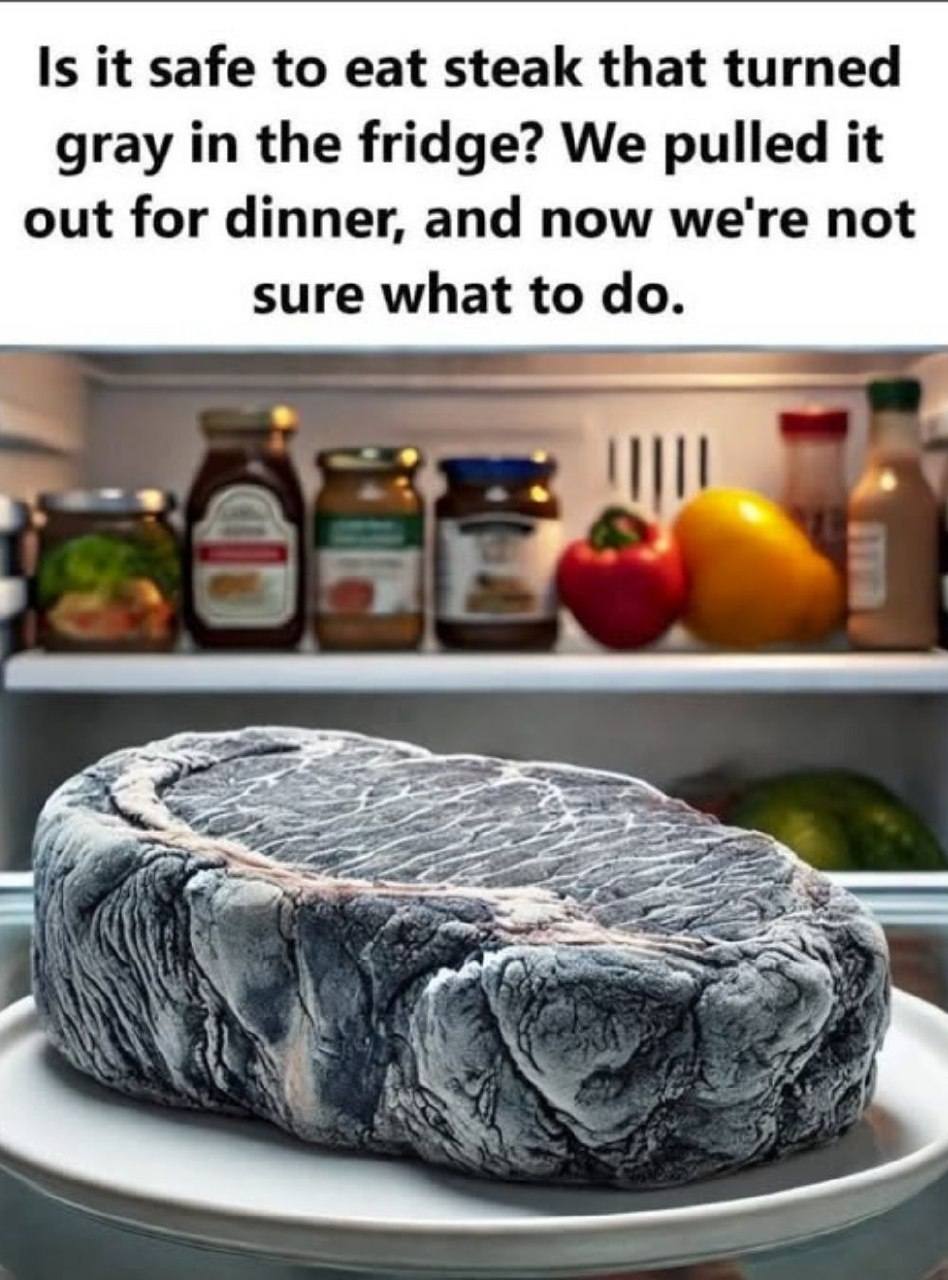
You’ve planned a steak dinner, but when you open the fridge, the meat looks gray instead of bright red. This can be unsettling, but a color change alone doesn’t automatically mean the steak is unsafe. Understanding why steak changes color and how to properly assess its condition can help you decide whether it’s still suitable to cook or should be discarded.
Why Steak Changes Color
Fresh steak is red because of oxymyoglobin, a pigment created when myoglobin in the meat comes into contact with oxygen. Over time, and especially with continued exposure to air, this pigment naturally changes. The meat may shift from bright red to grayish or brown. This process, called oxidation, is normal and does not necessarily indicate spoilage.
Common Reasons Steak Turns Gray
Several factors can cause this color change:
Oxidation
When steak is exposed to air, oxygen reacts with the pigments in the meat, altering its color.
Storage conditions
Vacuum-sealed or tightly wrapped meat may appear darker or gray because it has limited oxygen exposure, even when it’s still fresh.
Temperature fluctuations
Inconsistent refrigerator temperatures can accelerate color changes without affecting safety.
How to Tell If Gray Steak Is Still Safe
Color should never be the only factor you consider. Use your senses and a few practical checks:
Continued on the next page
Next Page
