
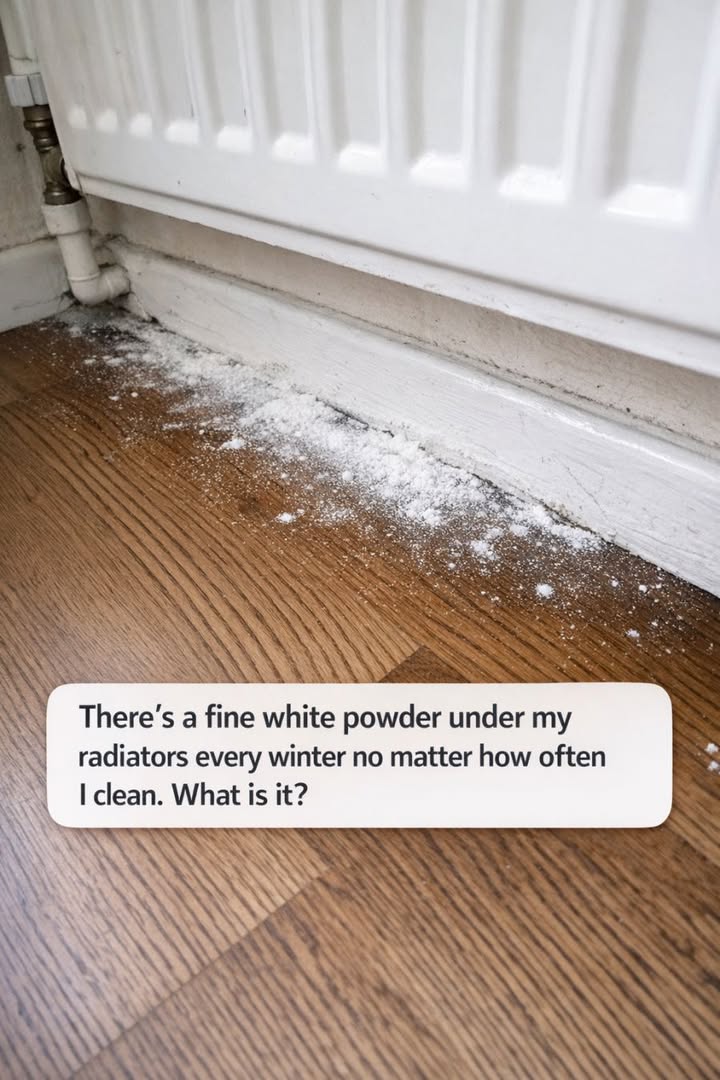
As the chilly months roll around each year, many homeowners face the perplexing issue of finding a fine white powder accumulating under their radiators. Despite regular cleaning, this powder seems to return annually, leaving many puzzled and concerned about what it could be and whether it poses any health risks. Understanding the source of this powder and how to prevent it can help maintain a cleaner and safer home environment.
Radiators are a common heating solution in many homes, particularly in older buildings. While they efficiently warm your living spaces, they can also contribute to unexpected maintenance challenges. The mysterious white dust is one such challenge, often linked to the materials used in your home’s construction and the interaction of these materials with the heat emitted by the radiators.
1. Why Radiators Leave Mysterious White Dust Every Winter
Radiators operate by heating the air around them, which in turn circulates throughout the room. This heating process can cause nearby materials, such as paint and plaster, to deteriorate over time. As these materials break down, they can produce a fine white dust that settles on the floor beneath the radiators. In older homes, this issue is more pronounced due to the age and condition of the materials.
Moreover, the cyclical nature of heating during the winter months exacerbates this process. The constant expansion and contraction of materials as they heat up and cool down can cause micro-fractures in paint and plaster, leading to further dust production.
2. How Aging Paint Turns Into Fine White Powder
Older paint, especially if it contains lead, is prone to deteriorating into a powdery substance when exposed to continuous heat. The heat from radiators can cause the binding agents in the paint to break down, leading to the formation of a chalky residue. This is particularly common in homes built before the 1970s, where lead-based paints were widely used.
As the paint ages, its ability to adhere to surfaces diminishes, especially under repeated thermal stress. This leads to the formation of fine particles that are easily dislodged and can accumulate under radiators, creating the white powder many homeowners observe.
3. Distinguishing Benign Dust From Dangerous Lead Paint
Identifying whether the white powder is simply benign dust or potentially hazardous lead paint is crucial for maintaining a safe home environment. One way to distinguish between the two is to conduct a lead test, which can be done using a simple testing kit available at most hardware stores. These kits can detect lead in paint within a few minutes, providing peace of mind or indicating the need for further action.
Next Page
